


- Role
- Frontend Angular Developer
- Year
- 2023
- Company
- ITGalax Solutions Pvt Ltd
- Platform
- iOS · Android
- Status
- Delivered
Overview
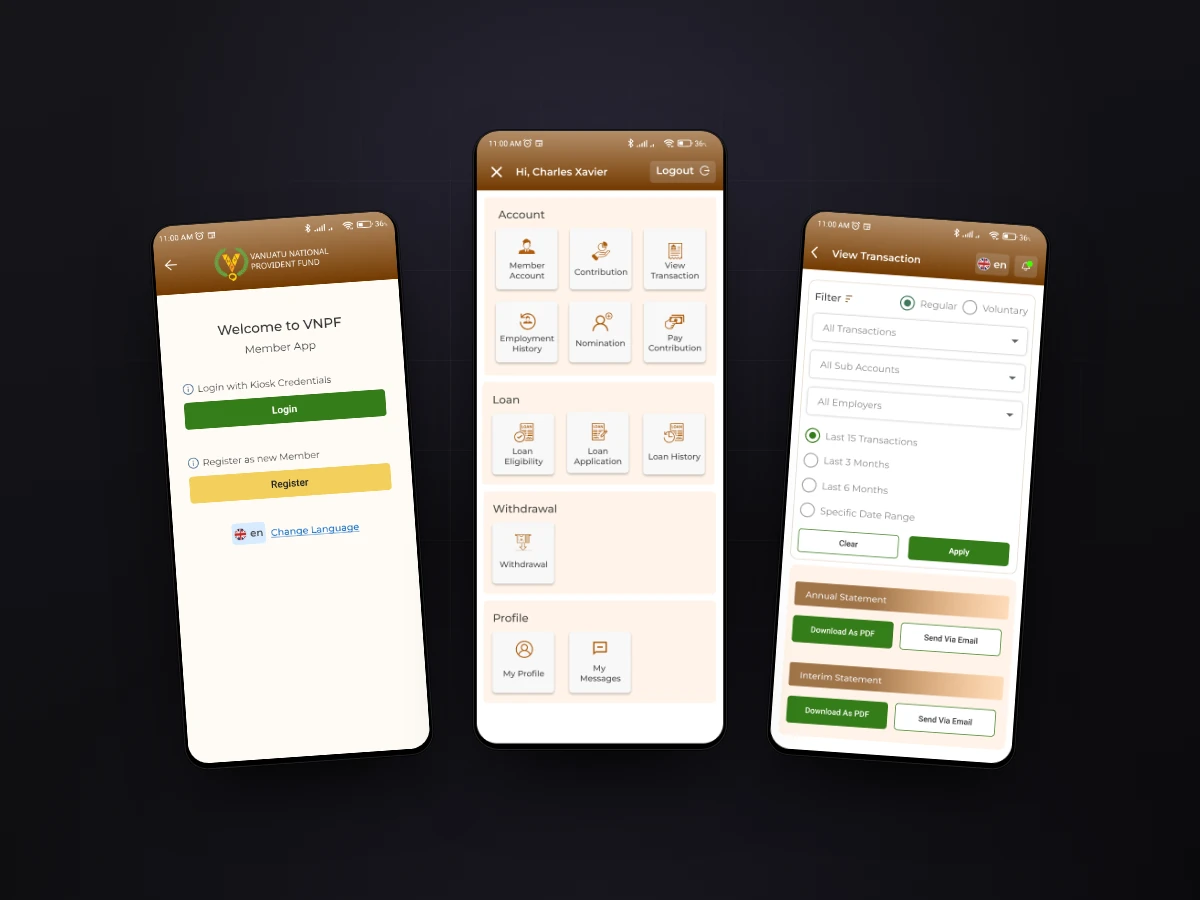
Mobile provident fund application providing members with access to balances, contributions, loans and account information from their phones.
The challenge
VNPF members needed convenient mobile access to their provident fund information without relying on desktop portals or physical offices.
The application needed to combine financial information, mobile usability and native device capabilities while maintaining a consistent experience across two operating systems.
The solution
A cross-platform Ionic and Angular mobile application using Capacitor to provide native capabilities, secure authentication and a consistent experience across iOS and Android.
Ionic and Angular provide the application foundation, Capacitor bridges native device capabilities and RxJS manages asynchronous application and account data flows.
My contribution
- Responsive interfaces across both mobile platforms
- REST API integration for member account and contribution data
- Secure authentication, including biometric sign-in
- Support for both App Store and Play Store releases
Key features
Member dashboard
Account balances
Contribution history
Loan information
Biometric authentication
Native device integration
Cross-platform mobile experience
Engineering decisions
- Problem
- Members check balances and statements on the devices they already own, which are frequently older phones on unreliable connections — and the same financial screens have to be correct on both iOS and Android.
- Decision
- One Ionic and Angular codebase with Capacitor bridging the native capabilities, rather than two separately built native applications.
- Why
- The screens are the same account views on both platforms. What genuinely differs is the native surface — secure authentication and device storage — and Capacitor confines that difference to a bridge instead of spreading it across two codebases.
- Trade-off
- Anything the bridge does not already expose has to be written as a plugin, and platform-specific behaviour still has to be tested and released on both stores rather than once.
- Problem
- Provident fund balances and contribution history are sensitive, but a member opening the app to check one number will not tolerate a full sign-in every time.
- Decision
- Biometric sign-in on top of the platform credential store, rather than a longer-lived session in the application layer.
- Why
- It moves the security cost onto the device, where the platform already solves it well, instead of trading safety for convenience in application code.
- Trade-off
- Devices without usable biometric hardware need a maintained fallback path, so there are two sign-in routes to keep working rather than one.
Stack
| App shell | Ionic + Angular |
|---|---|
| Native bridge | Capacitor |
| State | RxJS |
| Language | TypeScript |
Results
- Delivered a unified mobile experience for iOS and Android.
- Brought provident fund information closer to members through mobile self-service.
- Integrated native mobile capabilities through Capacitor.
Where to go next
- Ionic cross-platform mobile development — the service this project is evidence for.
Related case studies
Delivered
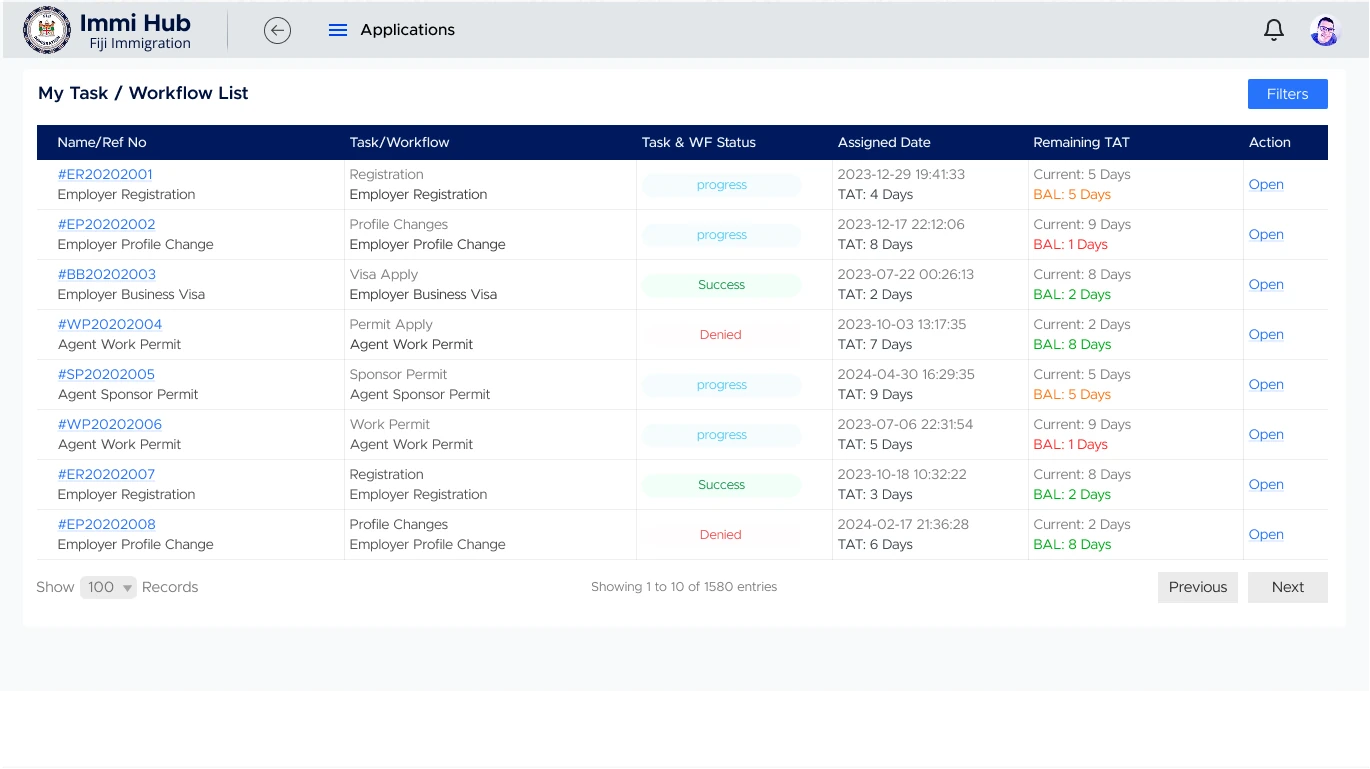
Fiji Immigration Internal Management System
The system immigration officers run a country borders on.
next up →InsureMet