


- Role
- Founder & Full-Stack Engineer
- Year
- 2026
- Platform
- Enterprise Web
- Status
- In progress
Overview
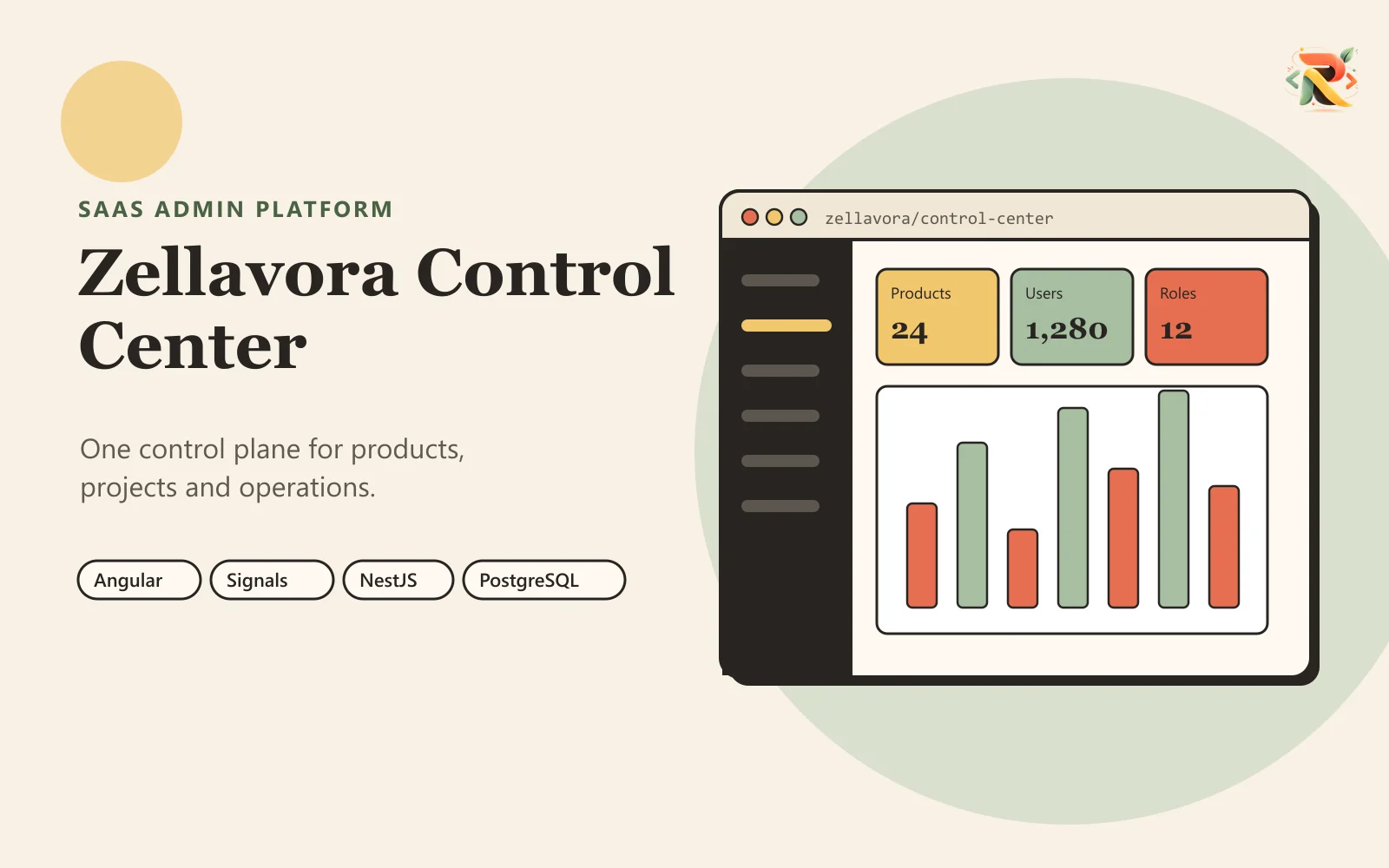
Centralized SaaS administration platform for managing products, projects, users, roles, permissions, content, configuration and operational activity.
The challenge
Multiple products and applications need a common operational layer for managing content, users, permissions, projects, configuration and system activity.
The platform needs to support multiple applications while keeping permissions, data ownership, auditability and API contracts consistent across the ecosystem.
The solution
A centralized control platform designed to manage multiple Zellavora products and applications through one secure administration environment and API-driven content architecture.
Angular 22 with standalone components, Signals and Zoneless architecture on the frontend, Tailwind CSS for the design system, NestJS APIs, PostgreSQL with Prisma and Supabase Storage for managed assets.
Key features
Centralized dashboard
User management
Role management
Permission management
Content management
Project management
System configuration
Audit logs
Activity monitoring
API-driven application content
Engineering decisions
- Problem
- Several products need the same operational layer — users, roles, permissions, content and configuration — and each one solving it separately means the rules drift apart.
- Decision
- One control platform owning that layer for the whole ecosystem, exposed to the products through API contracts rather than shared code.
- Why
- Permissions and auditability are exactly the things that must not differ between products. A contract boundary lets each product evolve its own interface without being able to reinterpret who is allowed to do what.
- Trade-off
- It becomes a central dependency: a contract change has to be coordinated across every product that consumes it, and the platform is a single point of failure for all of them.
Stack
| Frontend | Angular 22 — Signals, Zoneless |
|---|---|
| Styling | Tailwind CSS |
| API | NestJS |
| Database | PostgreSQL + Prisma |
| Storage | Supabase Storage |
Results
- Established a centralized operational architecture for multiple applications.
- Separated administration and content management from consuming applications.
- Created a scalable foundation for future Zellavora products and services.
Where to go next
- frontend architecture consulting — the service this project is evidence for.
Related case studies
Delivered
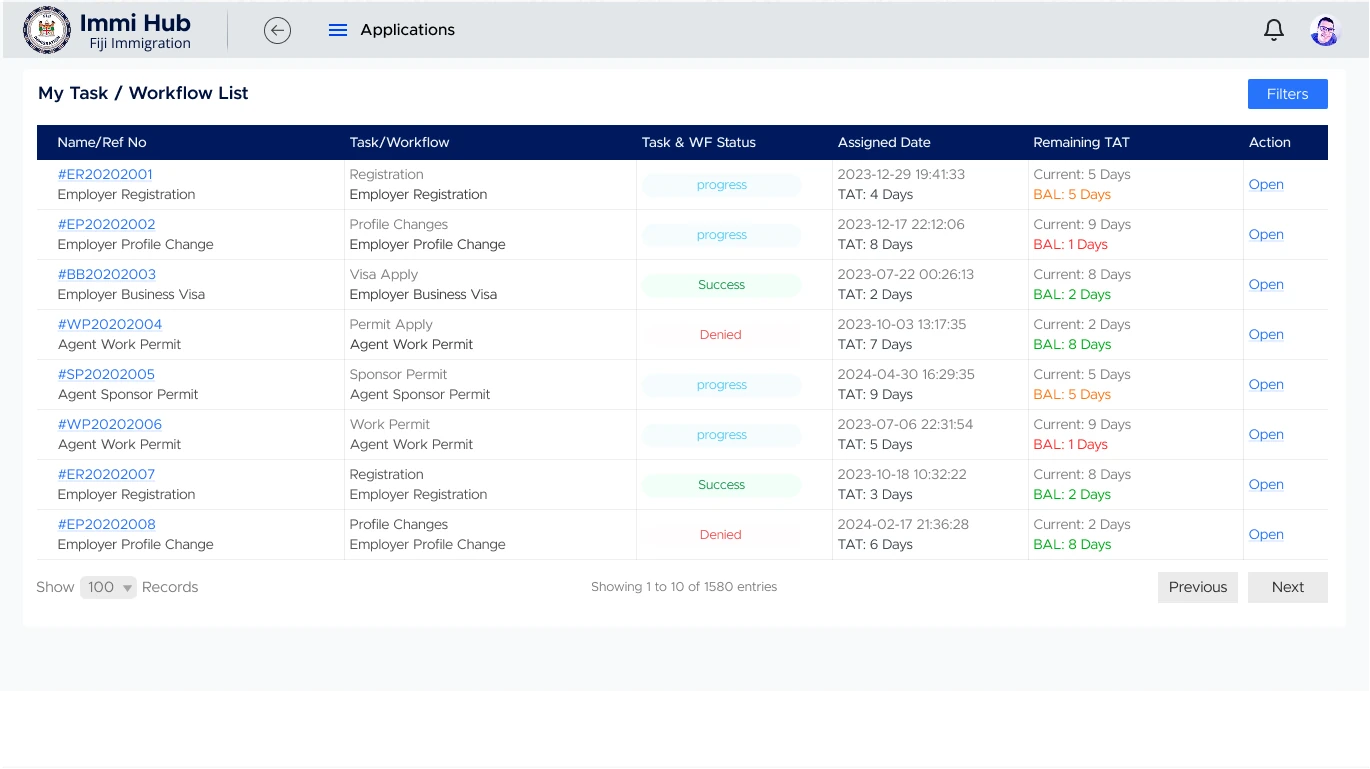
Fiji Immigration Internal Management System
The system immigration officers run a country borders on.
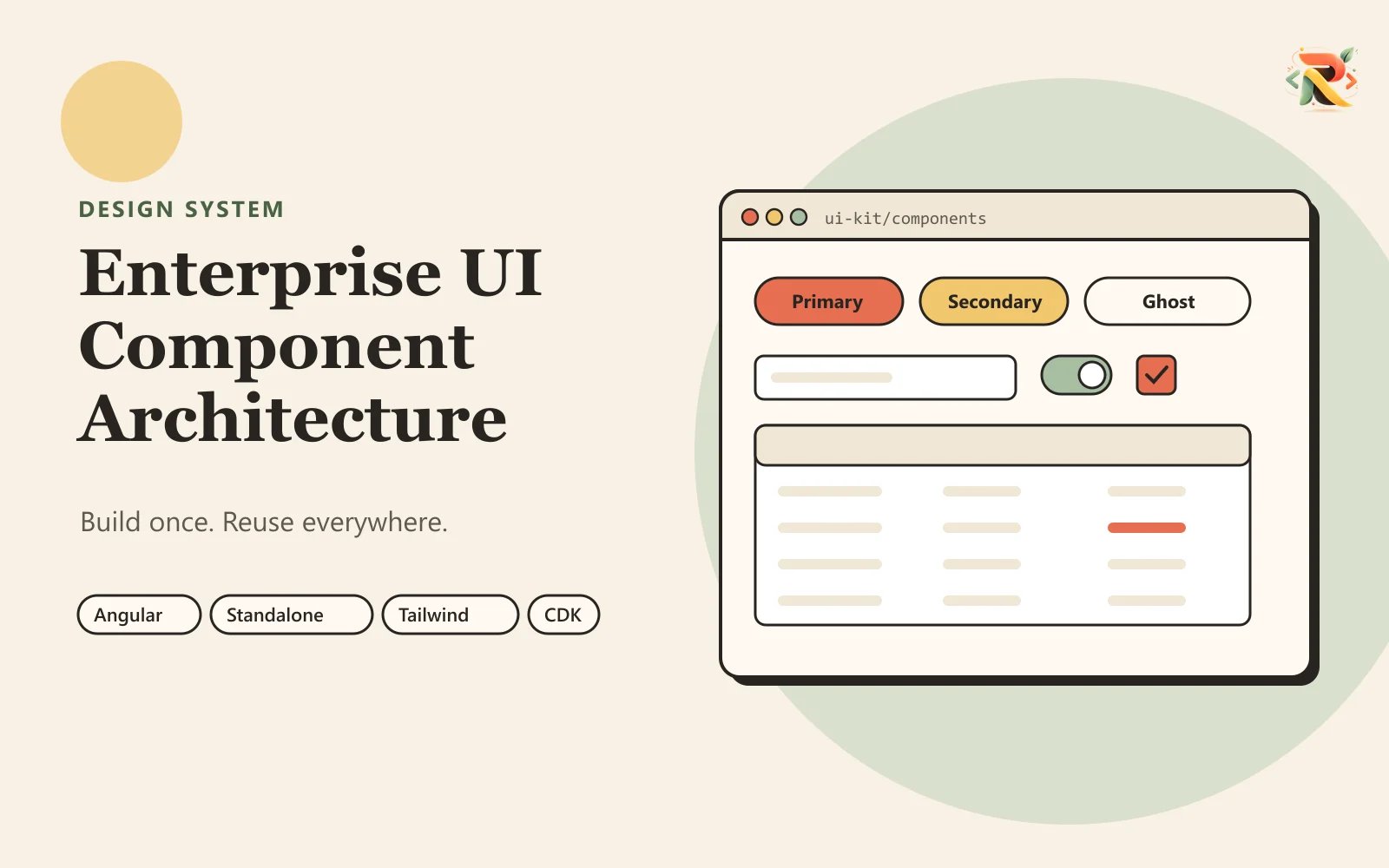
next up →Enterprise UI Component Architecture